Recherche par catégorie:
FORD Capri MK1
-
 PAFCLASSIC®
3rd/4th gear synchro for Ford E-Type/F-Type gearbox
£37.30
PAFCLASSIC®
3rd/4th gear synchro for Ford E-Type/F-Type gearbox
£37.30
-
 PAFCLASSIC®
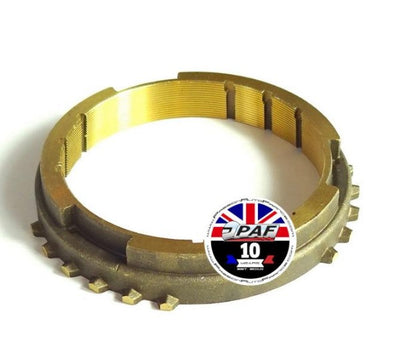
Reinforced 1st/2nd Gear Synchro for Ford Type 9 / Type E / Type F Gearbox
£39.00
PAFCLASSIC®
Reinforced 1st/2nd Gear Synchro for Ford Type 9 / Type E / Type F Gearbox
£39.00
-
 PAFCLASSIC®
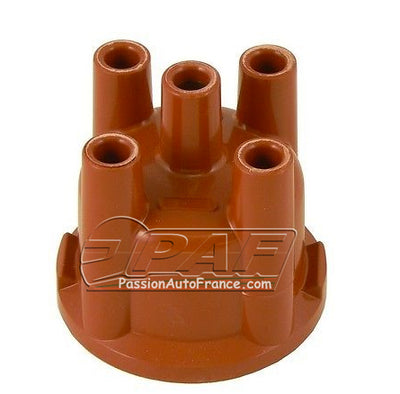
Delco head / Bosch ignition Ford Pinto / Xflow / V4
£18.25
PAFCLASSIC®
Delco head / Bosch ignition Ford Pinto / Xflow / V4
£18.25
-
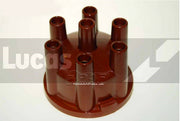
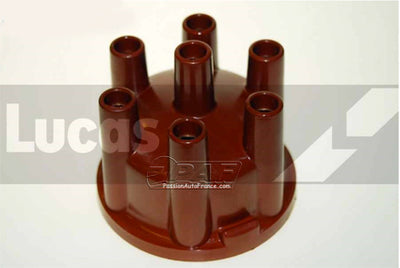 PAFCLASSIC®
Delco distributor cap / Bosch V6 Lucas DDB439 ignition
£28.50
PAFCLASSIC®
Delco distributor cap / Bosch V6 Lucas DDB439 ignition
£28.50
-

 PAFCLASSIC®
Delco head / Ford ignition Ford Cosworth 2.0 YB 4wd green/blue/red top
£19.00
PAFCLASSIC®
Delco head / Ford ignition Ford Cosworth 2.0 YB 4wd green/blue/red top
£19.00
-

 PAFCLASSIC®
Distributor cap / Ford ignition for Ford Sierra Cosworth 2.0 2WD and early 4WD
£39.00
PAFCLASSIC®
Distributor cap / Ford ignition for Ford Sierra Cosworth 2.0 2WD and early 4WD
£39.00
-

 PAFCLASSIC®
Delco distributor cap / Motorcraft ignition for Ford XFlow / Pinto
£18.00
PAFCLASSIC®
Delco distributor cap / Motorcraft ignition for Ford XFlow / Pinto
£18.00
-
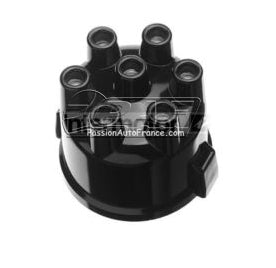 PAFCLASSIC®
Distributor cap / Motorcraft V6 Essex ignition
£26.75
PAFCLASSIC®
Distributor cap / Motorcraft V6 Essex ignition
£26.75
-

 PAFCLASSIC®
Beta Cloth Ford Escort MK1 / MK2 Capri MK1
Out of stock
PAFCLASSIC®
Beta Cloth Ford Escort MK1 / MK2 Capri MK1
Out of stock
-

 PAFCLASSIC®
Ford Capri MK1 Rear Wing Repair Panel
£74.95
PAFCLASSIC®
Ford Capri MK1 Rear Wing Repair Panel
£74.95
-
 Magnum
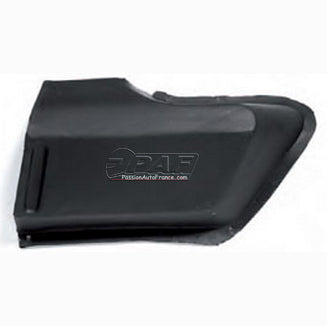
Front wing lower repair panel / Ford Capri MK1 MK2 MK3 door sill
£30.00
Magnum
Front wing lower repair panel / Ford Capri MK1 MK2 MK3 door sill
£30.00
-
 Magnum
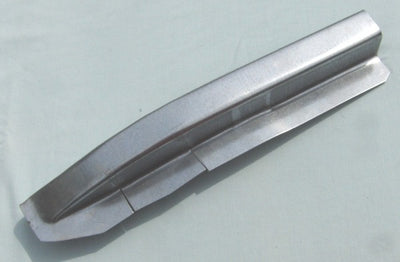
Ford Capri MK1 MK2 MK3 frame rail repair panel
£66.00
Magnum
Ford Capri MK1 MK2 MK3 frame rail repair panel
£66.00
-
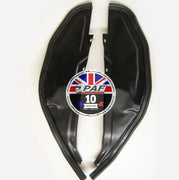
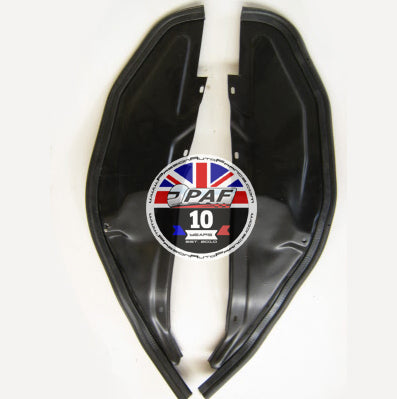 Magnum
Ford Capri MK1 MK2 MK3 Wheel Arch Panels
£75.00
Magnum
Ford Capri MK1 MK2 MK3 Wheel Arch Panels
£75.00
-

 PAFCLASSIC®
Ford Pinto 1.6 & 2.0 Cylinder Head Bolts – Set of 10 (REINZ) - Ford Escort, Capri, Sierra, Taunus
PAFCLASSIC®
Ford Pinto 1.6 & 2.0 Cylinder Head Bolts – Set of 10 (REINZ) - Ford Escort, Capri, Sierra, Taunus
£31.65£29.95 SALE -
 Lucas
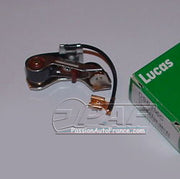
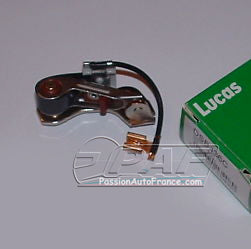
Plated Screws Audi, BMW, Ford, Lancia, Mercedes, Opel, Peugeot, Porsche, Renault, SAAB, VW, Volvo, Lucas DSB436C
£12.70
Lucas
Plated Screws Audi, BMW, Ford, Lancia, Mercedes, Opel, Peugeot, Porsche, Renault, SAAB, VW, Volvo, Lucas DSB436C
£12.70
-
 PAFCLASSIC®
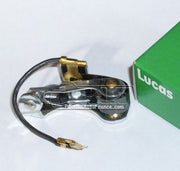
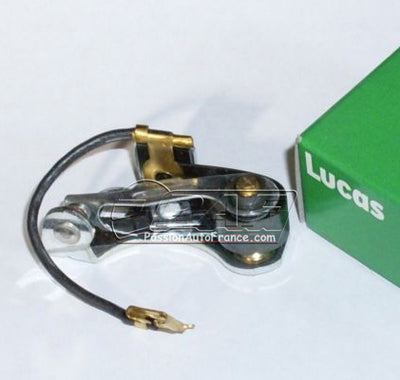
Lucas CS32/DSB432C contact points (Bosch ignition only) Capri, Escort, Consul, Cortina, Escort, Granada, Taunus, P100, Transit
£12.70
PAFCLASSIC®
Lucas CS32/DSB432C contact points (Bosch ignition only) Capri, Escort, Consul, Cortina, Escort, Granada, Taunus, P100, Transit
£12.70
-
 Lucas
Lucas EDP1 contact points for Ford Fomoco distributor only
£10.90
Lucas
Lucas EDP1 contact points for Ford Fomoco distributor only
£10.90
-
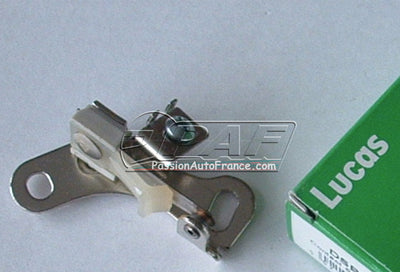 Lucas
Lucas EDP2 contact points for Ford Fomoco distributor only
£9.71
Lucas
Lucas EDP2 contact points for Ford Fomoco distributor only
£9.71


The story of the Ford Capri
Ford was the first to adapt to Europe the formula, very popular across the Atlantic, of offering a multitude of engines and equipment options under the same body style. This resulted in the Capri, one of the biggest commercial successes of the 1970s.
The Capri MK1
The Ford Capri's origins lie in another Ford, the Mustang. Launched in the spring of 1964, the Mustang fit a very simple definition: "a dream for not (too) much money." Indeed, for a starting price that was far from prohibitive (in Europe, it was roughly equivalent to that of an Opel Diplomat or a Lancia Flavia coupé), it was possible to buy a very sporty-looking car, endowed from its inception with a strong image (that of the first of the "pony cars," those American cars specifically designed to satisfy the aspirations of a young clientele eager for originality).
Of course, one couldn't expect the production models to match the performance of Henri Greder's Mustang, winner of the 1964 Tour de France Automobile. However, the silhouette was virtually identical, and this coupe offered the added bonus of interior space close to that of a sedan. The extraordinary popularity the Mustang enjoyed in America during its early years (100,000 cars sold in the first four months of sales!) prompted Ford, with the assistance of its German and British subsidiaries, to develop a car meeting the same criteria but specifically adapted to the expectations of European customers.
The development of the new car would last four years, during which three teams—British, German, and American—worked simultaneously on the project, codenamed "Colt." Oddly enough, it was ultimately the American design that was deemed the most "European." The new Ford made its first public appearance at the Brussels Motor Show in January 1969, under the name "Capri." This name had already been used in Europe by Ford of England for the limited-production but nonetheless distinctive coupé version of the Consul 315, as the name "Colt" had already been trademarked by Mitsubishi, which would use it for compact cars.
Technically, the Ford Capri didn't revolutionize its era: front engine/rear-wheel drive, rigid rear axle, drum brakes – no cutting-edge technical solutions. But it was well-built and offered the attractive silhouette of a two-door coupe for the price of a simple sedan. Its silhouette met the sporty criteria of the time, with its long hood, short rear end, and fuel filler cap integrated directly into one of the roof pillars.
Five engines, seven trim levels
Ford, having advocated collaboration between its European subsidiaries since the launch of the Ford Transit (1965) and following the example of the Escort, which appeared a few months earlier, would produce the Capri simultaneously in Germany, by the Ford factory in Cologne and in Great Britain, by a factory located in Halewood.
From its launch, customers could choose between several engines. In Germany, five were offered: three V4s (1300, 1500, and 1700 cc) and two V6s (2000 or 2300 cc). In England, the range was initially limited to two inline four-cylinder engines (1300 or 1600 cc) and one V4 (2000 cc). But from the autumn of 1969, a new 3000 version, equipped with the V6 from the previous Ford Zodiac, completed the British lineup. Again, no risks were taken: all these engines had been proven on other models in the range.
To ensure that every buyer could drive a car different from their neighbor's, the Ford catalog offers no fewer than seven trim levels. By combining options and engines—the 1700, 2000, and 2300 versions come standard with more comprehensive "GT" equipment—the result is an extremely varied selection: at the very bottom is the standard Capri, with a simplified presentation bordering on the spartan. Then come the "X," "L," "R" (for… Racing: all R versions feature Rostyle wheels with exposed studs), "XL," "XR," "GTX," "GTL," "GTR," "GTXL," "GTXR," and, at the very top, "GTXLR."
Each trim level, identified by a small badge at the bottom of the fenders, is distinguished by a few additional features (various wheel trims, dummy air intakes on the sides, etc.). In the case of the GT versions, these are complemented by power-assisted front disc brakes, radial tires, a wood-look dashboard and center console, a tachometer, a clock, two-speed windshield wipers, and so on. Only the German-made range is available in the French catalog, which has the advantage of not making an already difficult choice even more complicated.
A choice which will nevertheless expand further with the appearance, in the autumn of 1970, of the 2600 GT and especially the RS 2600. The latter is a lowered and lighter variant, studied by Jochen Neerspasch, head of the competition department of Ford-Germany, which no longer has much in common in terms of mechanics with the standard model.
Like Carroll Shelby a few years earlier with the Mustang 350 GT, Neerspasch would "cast a spell" on the Capri. Thanks to mechanical fuel injection (Kügelfischer system), the RS 2600 boasted 150 DIN horsepower. To ensure this power was better transferred to the road, the car was equipped with four specific shock absorbers, a revised suspension, and, as an option, a limited-slip rear axle. With a curb weight not exceeding 1080 kg (which can be reduced to 900 kg thanks to the adoption of fiberglass body panels and the replacement of the side windows with plexiglass), the Capri RS 2600, identifiable by its four headlights, matte black grille, lightweight alloy "spoke" wheels known as FAVO, a logo on the fuel filler flap, half-banana bumpers, and a black velvet sports interior with bucket seats, is capable of acceleration superior to that of a Porsche 911 S. Its price, however, is incomparable: 26,900 F compared to…66,000 F!
The Capri MK1 bis or facelift
In September 1972, the Ford Capri underwent several minor modifications. Capri enthusiasts refer to the models released from this date onward as the "Series I 1/2" or "Series Ibis" or "facelift" (as opposed to the Capri II, which would be launched in early 1974). The main changes compared to the first Capri (1969-72) were, externally, the adoption of larger headlights, twin taillights, a hood with a bulge on all models (including the base model), and the integration of the turn signals into the front bumper. The side vents also became more discreet, made of black plastic. The interior also evolved considerably with the adoption of a dashboard that would remain in use until the final models.
The main change was under the hood. The V4 engines gave way to Pinto-type blocks from the Taunus, while the Cortina and Kent engines were derived from the Escort (already used in England). At the entry level, the 1300 70 hp engine from the Escort replaced the V4 of the same displacement, significantly increasing the car's power. A new 1600 GT version, equipped with a four-cylinder overhead camshaft engine, appeared, replacing the older 1500 and 1700 V4 versions. All models, except the 1300, could be equipped with an optional automatic transmission.
The 2300 and 2600 V6 engines remain unchanged. The RS 2600 is carried over, this time with a satin black finish instead of chrome, and features some minor mechanical improvements that make the car less "wild." At the top of the range, the British 3-liter Essex engine is available in the very luxurious 3000 GXL version, which is not widely sold in France due to the high cost of the road tax.
The year 1973 saw the millionth Ford Capri roll off the production line (in August). A truly unprecedented figure for a coupe… The car was then at its peak, and, year in and year out, 200,000 units found buyers across the European and American markets (sold under the Mercury brand). The marketing specialists in Detroit had clearly hit the nail on the head…
PassionAutoFrance has been a partner of the Capri Passion Club since 2010.